One topology, not a list of boxes.
LAN and WAN, switching and routing, Wi-Fi, firewalls, and segmentation — designed as a single topology by WAM, installed and configured to that design by specialist partners, and verified against it before handover.
What it covers.
LAN and WAN
The site network and the links between sites and to the internet — sized from the traffic you actually carry, with the secondary path designed in rather than bolted on after the first outage.
Switching and routing
Core, distribution and access layers specified for what each one has to do, with an addressing plan and naming scheme that someone other than the person who built it can read.
Wi-Fi
Designed from a site survey — walls, interference, density — not from a floor plan. Corporate and guest traffic on separate segments from the first access point.
Firewalls
Perimeter and internal policy written down as a rule schedule before it is configured, so every rule has a reason and an owner.
Network segmentation
Staff, servers, guests, and operational equipment on separate segments that talk through the firewall, never directly. The single change that most limits what a compromise can reach.
How we approach it.
Designed from the traffic, not the catalogue
The survey establishes what the network carries and where it breaks. The design follows from that. We do not resell hardware, so nothing in the specification is there because someone needed to move it.
Segmentation is a design decision
It gets decided in the topology, with the firewall policy written alongside it, rather than left as a setting to turn on later. Retrofitting segments onto a flat network is the most common job we are asked to scope, and the hardest to do well.
Documented before it is built
Topology, addressing plan, VLAN schedule, and firewall rules exist as documents first. Partners configure to them; WAM inspects against them; you keep them.
Verified before you sign
Acceptance testing against the design — reachability between segments, failover on the secondary link, cable certification where new cabling is involved — with the results handed over, not summarised.
Who does what.
WAM scopes, designs, and leads; specialist delivery partners carry out the physical work to our design and under our project management. These are the stages that carry the weight on this pillar.
-
Design and specification
Architecture, rack layouts, cabling design, network topology, equipment specification, and the runbooks a migration or DR cutover will be executed from. Vendor-neutral, and yours to take elsewhere if you want.
-
Delivery and oversight
Partners install, cable, re-rack, migrate. WAM runs project management, change control, milestone tracking, and inspection against the design — including saying no when work doesn't meet it.
-
Commissioning and handover
Acceptance testing, cable certification, failover testing where it applies. You receive as-built documentation, labelling schedules and an asset register — handed over, not promised.
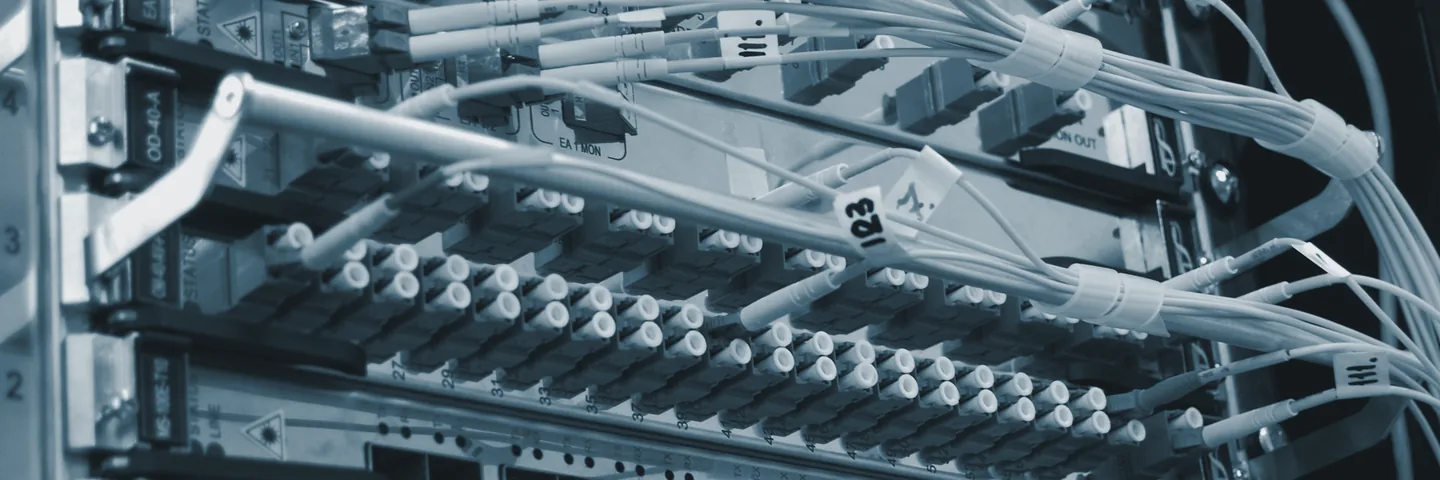
Every port on the frame has a name.
A topology only stays true if the documentation does. Ports, patches, and VLANs are labelled to a schedule you are handed, not to whatever the installer remembered.
What you receive.
Handed over at commissioning, not promised for later.
- Topology diagramsIP addressing planVLAN and segmentation scheduleFirewall rule scheduleConfiguration backupsAcceptance test resultsAs-built documentation
Straight answers.
Do you install and configure the network yourselves?
No. WAM surveys the site, designs the topology, and writes the addressing plan and firewall policy. Specialist delivery partners install and configure to that design under our project management, and WAM inspects the result against the design before you accept it.
Which vendors do you work with?
We are vendor-neutral. Equipment is specified by what the site needs — throughput, port density, features the design actually uses — and procured against that specification. We do not resell hardware and hold no vendor quota, so we have no reason to prefer one catalogue over another.
Can you segment an existing network without taking it down?
Usually in stages, and always planned around your operating windows. Some changes need a short outage and we say so in advance rather than discovering it on the night. What we will not do is quote a downtime figure before the survey.
Do you manage the firewall and network afterwards?
Support is optional and scoped per engagement — monitoring, change management, and break/fix, delivered by partners under our coordination. What it covers, including hours and response, is agreed in writing for your site rather than offered as a standard tier.
Do you do Wi-Fi site surveys?
Yes. Wi-Fi is designed from a survey of the actual space — construction, interference, where people cluster — as part of the assessment stage. A floor plan alone produces a network that works in the drawing.
Start with the topology.
Send us what you have — even a photo of the rack — and a senior engineer replies within two business days.