The move is the easy part.
Relocations, migrations, and disaster recovery. WAM writes the runbook and runs the rehearsal; specialist partners pack, transport, re-rack, cable, and migrate to it; nothing cuts over without a verified fallback.
What it covers.
Relocation planning and inventory
Site assessment at both ends, a full asset and dependency inventory, and a risk register — including the dependencies nobody wrote down, which are the ones that stop a move.
Shutdown and startup sequencing
The order things go down and the order they come back up, with an owner and a check for every step. Written as a runbook you can rehearse, not a plan you read once.
Packing, transport, re-racking, and cabling
The physical move, carried out by specialist partners to the runbook and under our project management, with testing at the far end before anything is declared up.
Workload migration
Server, storage, application, and cloud workloads moved in a sequence that keeps dependencies intact — the same discipline whether the target is a new site or a cloud region.
DR design, replication, and failover testing
A disaster recovery site designed for the recovery you actually need, replication that matches it, and failover that gets exercised on a schedule rather than trusted.
How we approach it.
Inventory first
Every migration that goes wrong goes wrong on something that was not on the list. The assessment stage produces the list — assets, dependencies, owners, and the constraints around each — before a date is discussed.
A runbook you can rehearse
Sequenced shutdown and startup, an owner per step, and pass criteria per step. It is rehearsed until it passes, and the rehearsals change the runbook. The move itself is then the part that has already been done.
A fallback that has actually been tested
Nothing cuts over without a written go / no-go decision and a rollback path that was exercised before the gate, not improvised after it. The source stays live until the target is verified.
DR that gets exercised
A DR site that has never failed over is a hope. Failover testing is designed into the plan with a schedule, and each test produces a report and, usually, a change.
Who does what.
WAM scopes, designs, and leads; specialist delivery partners carry out the physical work to our design and under our project management. These are the stages that carry the weight on this pillar.
-
Survey and assessment
Technical survey, site assessment, inventory, power, cooling and capacity review, and the constraints nobody wrote down. Ends with a written picture of what you actually have.
-
Design and specification
Architecture, rack layouts, cabling design, network topology, equipment specification, and the runbooks a migration or DR cutover will be executed from. Vendor-neutral, and yours to take elsewhere if you want.
-
Delivery and oversight
Partners install, cable, re-rack, migrate. WAM runs project management, change control, milestone tracking, and inspection against the design — including saying no when work doesn't meet it.
-
Commissioning and handover
Acceptance testing, cable certification, failover testing where it applies. You receive as-built documentation, labelling schedules and an asset register — handed over, not promised.
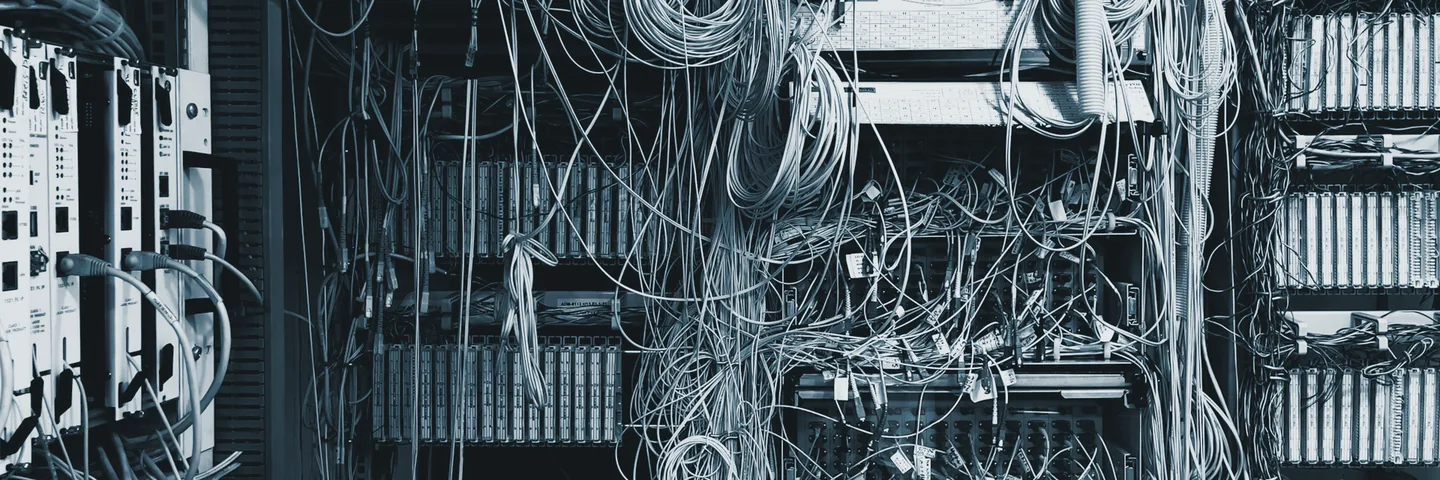
Most migrations start somewhere like this.
Nobody hands you a clean room and a current diagram. The inventory stage exists because what is actually running is never quite what the documentation says.
What you receive.
Handed over at commissioning, not promised for later.
- Asset and dependency inventoryRisk registerSequenced shutdown and startup runbookCutover plan with go / no-go criteria and rollbackPost-move test resultsAs-built documentationDR test report
Straight answers.
Do you move the equipment yourselves?
No. WAM plans, sequences, and verifies the move; specialist delivery partners pack, transport, re-rack, cable, and test to the runbook under our project management. You hold one contract and one point of accountability for the whole move.
How much downtime should we expect?
It depends on what is moving and what it depends on, which is exactly what the assessment stage establishes. We plan around your operating windows and tell you the expected outage per step before the gate. We will not quote a downtime figure before the inventory exists.
Can we migrate to the cloud instead of a new site?
Yes. Workload migration to a cloud region runs on the same runbook discipline as a physical move, and the assessment often shows a mix — some workloads to the cloud, some to a smaller site. Cloud and hybrid IT is its own pillar of the infrastructure track.
Do you actually test the DR site?
Yes. Failover testing is designed into the DR plan with a schedule, and each exercise produces a report. A DR site that has never been failed over is not one we would sign off as ready.
What happens if something fails during the move?
The rollback path is defined and exercised before the go / no-go gate, and the source stays live until the target is verified. A failed step means stopping at that step and either fixing forward or rolling back to a known state — the runbook says which, in advance.
Start with the inventory.
Tell us what is moving, where, and when it has to be back up. A senior engineer replies within two business days.